
How to Prevent the Summer Slide Without Misery
A short, parent-tested approach to keeping summer learning gentle: 15 minutes a day, a few books your kid likes, and zero crying at the kitchen table.
By Fox & Fern Books 4 min read
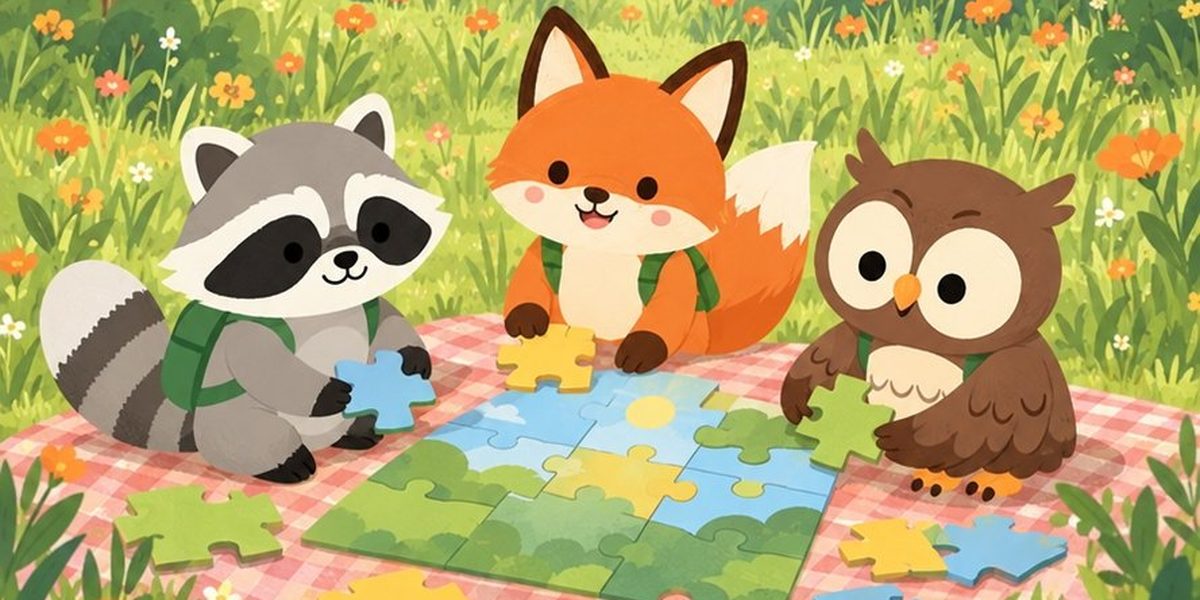
Every June, somebody on a parenting podcast says the words summer slide like they’re announcing a hurricane. Two months off school, the warning goes, and your kid is going to lose a third of a year’s reading. You panic-buy a workbook, plant it on the counter on July 5th, and by July 7th nobody has touched it. By August you’ve made peace with the slide and resentment has set in on both sides.
Here is the thing the panic articles never say out loud: most kids do not lose a third of a school year over the summer. The research that gets cited is older, broader, and based on a pretty narrow window of skills. What kids do lose, sometimes, is fluency, the smoothness that comes from doing a thing every day. Math facts feel slower. Reading stamina dips. Handwriting gets a little wobbly.
Fluency comes back fast. But you don’t get the bounce-back unless you keep the engine warm. And you don’t keep the engine warm by setting up a summer school in your dining room. You keep it warm with a tiny, boring, daily ritual that takes less time than getting the sand out of someone’s bathing suit.
The 15-minute rule
Pick fifteen minutes. Same time every day if you can, right after breakfast tends to work, before the day’s plans take over. Set a kitchen timer. When it dings, you stop, even if your kid wants to keep going. Especially if your kid wants to keep going. The whole point is that this never feels like a punishment.
Inside that fifteen minutes, rotate three things across the week:
- Two days of writing or workbook practice. A page or two from a grade-appropriate workbook. Not a chapter. A page.
- Two days of reading. Out loud for younger kids, silently for older ones. Library book, comic, cereal box, whatever.
- One day of math facts or a logic puzzle. Flash cards, a sudoku-for-kids, a simple word problem at the breakfast table.
Three categories, fifteen minutes, every weekday. That’s it. Weekends are off. No make-up days. If you skip a Tuesday because the pool happened, Tuesday is gone forever and you pick back up Wednesday.
Why it works
The structure is doing two specific jobs that “just read more this summer” doesn’t.
First, it’s small enough to actually happen. Fifteen minutes is shorter than the negotiation about whether to do thirty. Parents who try to enforce an hour of practice usually get fifteen minutes of practice and forty-five minutes of conflict, and they walk away feeling like the whole project failed. Start at the size you can win at.
Second, it’s varied enough that no single skill gets resented. If a kid does the same handwriting page for sixty days, they will hate handwriting. If they rotate through reading, math, and a workbook page, no single thing carries the weight of “summer learning.”
How to actually pull this off
A few things that help:
Let your kid pick the book. Not for the workbook page, that you choose. But for the reading days, hand over the choice completely. Graphic novels count. Pokemon strategy guides count. Re-reading the same Dog Man for the fourth time counts. Reading is reading.
Make the workbook visible but not nagged about. Leave it on the kitchen table with a pencil already on the page. Kids resist things that feel like a parent’s project. They engage with things that look like normal household objects you’ve forgotten about.
Praise the streak, not the page. “You did your fifteen minutes for ten days in a row” lands differently than “great job on that page.” The streak is the win. The page is the byproduct.
Build in escape hatches. Pool day? Skip it. Long road trip? Throw a chapter book in the car and call that practice. Grandma visiting? Off. The schedule is a default, not a contract.
What to expect by August
If you do this most weekdays from June through mid-August, your kid will start the next grade roughly where they ended the last one. No giant leap forward, no slide backward. They’ll know how to sit down with a workbook page because they’ve been doing it. They’ll have read whatever they wanted to read. And, this is the part the panic articles miss. They’ll have had a normal, unscheduled, mostly-summer summer.
That’s the whole goal. Not academic gains. Not enrichment. Just keeping the engine warm so September is easier on everyone.
If you want a workbook that fits this shape, short pages, varied skills, designed to be done in ten or fifteen minutes, our Tomorrow Trail Activity Workbooks are built around exactly this idea. One book per grade band, one page per day, designed for kids who’d rather be at the pool. Which is most of them. As it should be.
- #parents
- #summer learning
- #routines